It is this crisis of the idea of progress that we can feel all over Ernst Jünger’s oeuvre, from his famous diaries of his experience in the Great War (In Stahlgewittern), to his “prophetic” work Der Arbeiter and his late novels. But one book of his in particular allows us to penetrate in the nihilistic zeitgeist of the inter-war period: his Auf den Marmorklippen, published at the zenith of Hitler’s power, in 1939. This little book – On the Marble Cliffs, in English –, forgotten in the same way which its author is neglected by the intelligentsia, tells us more about our own times – which are also times of crisis – than several of the “scientific” works that are widespread today, and which denounce a supposedly evident return of fascism. In this jüngerian tale, the despotic figure of the tyrant appears in its most violent essence, as the result of a cosmological disorder that hits society in all of its foundations. On the Marble Cliffs is a book that needs to be remembered, the meaning of which seems today almost as intelligible – and appropriate – as when it was first published.
We aspire to an objective, practical understanding of Ernst Jünger's life and works, and encourage other seekers of freedom and self-realisation to join us. Jünger's insights can function as a valuable roadmap to freedom and meaning for individuals in today's social and spiritual landscape. Crucial is his figure of the autonomous and inwardly-free anarch (in contrast to the impotent and self-destructive anarchist) as presented in his important novel EUMESWIL.
Showing posts with label titanism. Show all posts
February 17, 2021
Between Order and Disorder: Ernst Jünger on the Marble Cliffs - by Francisco Carmo Garcia
(From VoegelinView, 16 Feb 2021)
October 28, 2019
November 13, 2017
"Technikutopie und Technikkritik bei den Brüdern Jünger": Tagungsprogramm 2018, Ernst und F.G. Jünger Gesellschaft
Kloster Heiligkreuztal, 23–25 März 2018
** Information und Anmeldung: Ernst und Friedrich Georg Jünger-Gesellschaft. Oder direkt per E-Mail an Hans-Peter Oberle
Freitag, 23 März 2018
- 20:00 - Eröffnung des Symposiums - Alexander Pschera und Thomas Bantle
- 20:15 - Die Philosophie der Technik in den 20er und 30er Jahren und Jüngers Arbeiter - Alexander Michailowski
- 21:30 - Umtrunk
Samstag, 24 März 2018
- 9:00 - Ernst Jüngers medientheoretische Überlegungen - Detlev Schöttker
- 10:00 - Jüngers Philosophie der Technik und Heidegger - Vincent Blok
- 11:00 - Kaffeepause
- 11:30 - F. G. Jüngers Perfektion der Technik im europäischen Denkkontext - Alexander Pschera
12:30 - Mittagessen
- 14:00 - Vom Verlust des Raumes in Zeiten der Beschleunigung: Ernst Jüngers Reiseprosa und die technische Moderne
- 15:00 - Schiffbruch mit Zuschauer. Zur Technikkritik im Myrdun und Der Waldgang - Niels Penke
- 16:00 - Kaffeepause
- 17:00 - Mitgliederversammlung der Ernst und Friedrich Georg Jünger-Gesellschaft e.V.
- 18:30 - Abendbrot
- 20:00 - Abendveranstaltung: Michael König (Burgtheater Wien) liest aus Ernst Jüngers Waldgang
Sonntag, 25 März 2018
- 9:30 - Ernst Jüngers Gläserne Bienen - Niels Werber
- 10:30 - Eumeswil und die Posthistoire - Helmuth Kiesel
- 12:00 - Besuch Jünger-Haus
- 13:00 - Mittagessen im Löwen, Wilflingen
- Ausklang - Mokka in Stauffenberg´schen Schloß, Wilflingen
February 23, 2017
Programm des Jünger-Symposions 2017 "AUF DEN MARMORKLIPPEN"
Ernst Jüngers „Auf den Marmorklippen“ – eine literarische Auseinandersetzung mit dem NS-Regime. Ernst und Friedrich Jünger Gesellschaft
Kloster Heiligkreuztal, 7. – 9. April 2017
Freitag, 7. April
20.00 Eröffnung des Symposiums, Alexander Pschera und Thomas Bantle
20.15 Hans-Dieter Schäfer, Ernst Jünger und die literarische Moderne im Nationalsozialismus
21.30 Umtrunk
Samstag, 8. April
09.00 Sigfried Lokatis, Ernst Jüngers „Marmorklippen“ und die Hanseatische Verlagsanstalt
10.00 Detlev Schöttker, Wer ist Otho? Zur Rolle Brasiliens in den Marmorklippen
11.00 Kaffeepause
May 17, 2016
CONFERENZA: Ernst Jünger tra censura e tecnica
Cari soci e simpatizzanti, siamo lieti di invitarVi ad un incontro dal titolo generale:
ERNST JÜNGER - TRA CENSURA E TECNICA
Sabato 21 maggio, ore 17
Hotel Croce di Malta
Via della Scala 7, Firenze
RelatorI: Valentina Menesatti e Pietro Piro.
Pierluigi Moressa al termine ci leggerà pagine tratte da Sulle scogliere di marmo di Ernst Jünger. Nel corso dell' incontro si esaminerà la possibilità di raggiungere zone sottratte al potere del Leviatano tecno-logico, dove l'uomo può incontrare se stesso e la propria divina potenza, lontano dal deserto del nichilismo. Che ne sarà dell' uomo? Se il destino della tecnica è quello di accrescere sempre di più la
May 1, 2012
Swedish documentary on Jünger - now in English!
The Swedish documentary on Ernst Jünger, previously only available in Swedish, has recently appeared on Youtube with English subtitles. Enjoy!
February 20, 2012
Concordia, Concorde, Titanic - Cassandra's warnings
UPDATE 20.02.2012: as the anonymous commentator below says, with the wreck of the Concordia, Cassandra may be reminding us in a whisper of what she shouted out 100 years ago with the Titanic, and, less obviously, with the Concorde disaster. But what else should we expect in our titanic world: for as much rhetoric about peace and harmony as there is today, titans are by their very nature not a concordant group - and when humanity becomes for a period titanic, then manifestations of egoism on a monumental scale are the result. These in turn can only ultimately result in disaccord and catastrophe. For those who have ears: Cassandra's warnings are only mild foreshadowings of what must come with the inevitable fall of the titans and what must happen to the human constructions and attitudes that follow the titanic model.
For those interested, this is all preeminently explained by F.G. Jünger in his Griechische Götter.
July 21, 2011
Titanism 101
The titanic orientation of our contemporary humanity is a theme continually referred to and explained by Ernst Jünger and his brother Friedrich Georg. It might be useful to readers to have their vision applied in simple form to a few concrete aspects of our modern world.
According to one interpretation, the etymology of the ancient Greek word "titan" expresses the notion of an "over-stretcher" or over-extender. This expresses the titans' lack of a sense of measure when it comes to expressing power. Put in Nietzsche's terms, titans are motivated by a blind and insatiable will to power: always more to the point of extreme, without a conception of balance, of a point of sufficiency or equilibrium that can be reached and then maintained over time. The gods, who the titans periodically overthrow and briefly manage to keep out of the picture, represent this sense of balance and equilibrium.
It is already clear from this description how civilization in the last couple of centuries has become ever more titanic, beginning in the west but now reaching global extension. According to Jünger, our period is the next return of the titans after that of Imperial Rome. I believe we are slowly starting to understand the dangers of titanic arrogance in man and, at least theoretically and in restricted circles, contemplating a retreat from its unsustainable, inescapably catastrophic approach to existence and also the manner in which the next phase may emerge, a return of order-restoring "gods".
Here then are some superficially explained examples of titanism as it presently manifests.
According to one interpretation, the etymology of the ancient Greek word "titan" expresses the notion of an "over-stretcher" or over-extender. This expresses the titans' lack of a sense of measure when it comes to expressing power. Put in Nietzsche's terms, titans are motivated by a blind and insatiable will to power: always more to the point of extreme, without a conception of balance, of a point of sufficiency or equilibrium that can be reached and then maintained over time. The gods, who the titans periodically overthrow and briefly manage to keep out of the picture, represent this sense of balance and equilibrium.
It is already clear from this description how civilization in the last couple of centuries has become ever more titanic, beginning in the west but now reaching global extension. According to Jünger, our period is the next return of the titans after that of Imperial Rome. I believe we are slowly starting to understand the dangers of titanic arrogance in man and, at least theoretically and in restricted circles, contemplating a retreat from its unsustainable, inescapably catastrophic approach to existence and also the manner in which the next phase may emerge, a return of order-restoring "gods".
Here then are some superficially explained examples of titanism as it presently manifests.
January 31, 2011
Neunzig Verweht - Dokumentarfilm über Ernst Jünger (1985)
Einen guten Dokumentarfilm von 1985 über Ernst Jünger habe ich kürzlich entdeckt - "90 Verweht" heißt er in Andeutung auf dem 90 Geburtstag Ernst Jüngers in selbem Jahr. Eigentlich gefällt mir dieses besser als das andere, das man schon langem im Internet finden kann (Ich widerspreche mir nicht, 1977).
Teil 1
Teil 2
Teil 3
Teil 1
Teil 2
Teil 3
September 11, 2010
A new color! "Global grey"
I'm going to stray from direct reference to Ernst Jünger here, though it will be in the train of his thinking regarding global "levelization" or flattening of culture.
I was in the United Nations building here last week, since I can do duty-free shopping there. Indeed, I have no other reason to go, since the place basically depresses me everytime I visit.
Why? Because it becomes apparent there in microcosm how globalization ultimately leads not to a fascinating colorful tapestry of cultures but to a uniform "global grey".
If one imagines taking all the world´s flags and composing a mosaic of them, on a sphere like this unknown graphic artist has done, a cheerful and stimulating impression results. According to color theory, if one spun this globe very fast, assuming all the colors of the rainbow were present in the various flags, a pure white would result. This is additive color mixing - the frequencies of the colors are added to each to produce full-spectrum visible light, which is white.
June 1, 2010
BP oil spill - the elements unleashed and running riot
The BP oil spill in the Gulf of Mexico reminded me of a chapter in Friedrich Georg Jünger's "The Failure of Technology - Perfection without Purpose", which I have reproduced almost completely below. I hope it may help intelligent readers who want to go deeper in understanding what has happened than is given them in the typical media or environmental analysis. In fact, I would highly recommend this book, soon to be republished by Alethes Press, for a deeper understanding of the titanic nature of technology and its eventual intrinsically-inevitable failure as it approaches perfection.
In this chapter, Friedrich Georg Jünger describes how technology is fundamentally based on the tapping, confining and controlled application/release of elemental energies in nature. In effect, these energies and forces of the earth are narrowly confined by man's technology into receptacles and machines that store and then transform them into motion, heat, etc. That is, they are carefully imprisoned. The extreme example of this is nuclear energy, in which the elemental forces of matter itself are tapped - once this unlimited reservoir of energy has been broken into by technology, the forces unleashed have to be handled extremely carefully, imprisoned in the highest security jails and only allowed very controlled outlets. When however they break free, their wrath is all the more violent, the more restrictively they have been confined. A nuclear meltdown or atomic bomb would be the most extreme example of the imprisoned energies gaining their freedom and wreaking havoc. An oil well uncontrollably gushing its elemental forces into the world is another excellent one.
As numerous paragraphs in the passages below will show (in red), Friedrich Georg Jünger managed to foresee in 1939 something very similar to what has now happened to the BP oil well in the Gulf of Mexico. Its deep fundamental causes are all present in his analysis. The following should also function as a warning for future jailbreaks of all the energies we have tapped into and then confined in our apparatus.
(I sometimes imagine the firestorm that will result if an industrial blaze in an urban area gets so hot that it begins to uncontrollably ignite all the confined flameable materials present in a typical modern city - all the petroleum in millions of car tanks and gas stations, all the oil-based synthetic materials present in every house and office, the gas pipelines, etc. Such an inferno, once beyond a certain heat, would not be controllable by Man's means; it would make all previous city infernos hearth fires by comparison. That this is subconsciously perceived by society is evidenced by the astonishment and fear elicited by the sight of a simple open flame in the city, in an illegal garbage burning or campfire for example - un-imprisoned fire is completely absent in cities; and when it is seen, it immediately provokes fear, despite the fact that despite millions of confined blazes are happening in every moment in car engines, home furnaces, factories etc. If there is ever a jail break, we will do well to get far away.)
Anyhow, here is plenty of food for thought from F.G.J:
Whatever power technology produces, it draws from nature's reservoir in the same fashion as one draws a pint from a barrel. This holds true regardless how ingenious the means may be by which technology taps the sources of its power.
The technician has lost the age-old awe that restrained man from injuring the earth, from changing the shape of its surface. This awe in the past was very pronounced; its traces are found everywhere in the history of agriculture, and it reaches well into historical times....
The technician however proceeds without awe, as his methods show. To him, the earth is an object for intelligent and artful planning, a lifeless sphere subject to mechanical motion and exploitation by him who understands its mechanics. Ruthlessly the technician conquers the earth in his quest for power; he confines the elemental forces in engines where they must obey and deliver power. Elementary nature and man-made mechanisms controlled by human intelligence will clash and the outcome is an act of enslavement which presses elemental forces into service. Their free play is ended by force.
We gain a clear idea of this process is we imagine it as an act of tapping or bleeding. Man taps elemental nature and drains her forces. The wells and shafts driven into the earth everywhere to get at her underground treasures, those factories which extract the nitrogen from the air, or simply ways of transforming clay into bricks - these are all taps and drains....
With the progress of technology, the sum total of the contributions which it extracts from nature grows bigger and bigger. Elemental nature, through mechanical work, is being mastered; it is being conquered and exploited by man-made tools. But if we thought this to be the whole story, we would understand but half of it. We would have only a one-sided idea of the process. For all this seemingly one-sided pressure and compulsion, this engineered extortion of nature, has a reverse side, a counter-part. Because the elementary now floods with its power all things mechanical, it permeates and expands all over the man-made world which has conquered it. In other words, mechanization and elementarization are merely two aspects of the same process; they presuppose one another....
As we look around today we feel that we are living in a giant mill which works day and night at a furious, feverish pace.... This is the workshop of the Titans. The industrial landscape is volcanic in its character, and thus all the companion-signs of volcanic eruption are found, especially in the areas of heavy industry: lava, ashes, fumaroles, smoke, gases, night clouds reddened by flames - and devastation far and wide. Titanic elemental forces captured in marvelous engines are straining against pistons and cylinder walls as crankshafts are moving and delivering an even flow of power. All the elements are racing and raging through the jails of man-made apparatus; all those boilers, pipelines, gearboxes, valves are steely and bristling with reinforcements, as is every jail, designed to keep its inmates from escaping. But who can remain deaf to the sighing and moaning of the prisoners, to their raging and ranting, to their mad fury, as he listens to the multitude of new and strange noises which technology has created? Characteristically, all these originate from the meeting of the mechanical with the elemental; they are produced by the outflow of elementary forces from the contraining might of the machine....
At a certain stage of technological progress, the individual begins to become aware that he has entered into a danger zone. Gradually the smug satisfaction which the observor derived from the sight of some marvelous piece of machinery, gets mingled with a sense of impending danger; fear befalls him....
The realization that man has to pay a price for every increase in power the machine gives him, that he must give an equivalent in return, is a realization that had not yet dawned in the early days of technology. In those days, boundless economic confidence predominated, an unshakeable optimism about the future.... As technology approaches perfection, however, the chorus of optimistic voices grows weaker, because experience gradually teaches not only the advantages but also the disadvantages which the new tools bring. Only by experience do we learn that our technological apparatus has its own laws, and that we must be on our guard against getting in conflict with them.
The industrial accident may serve here as an illustration. As mechanization progresses, industrial and traffic accidents increase until they far exceed the casualties of war. Since even the most ingenious inventions cannot eliminate these accidents, it is clear that they must be due to some basic discrepancy between the operator and the mechanism he operates. The operational accident occurs when man fails to function as a human machine, where he no longer acts in accord with the automatic mechanism he is operating. The operational accident, in other words, occurs precisely where we are human, where we try to assert our independence of the machine, be it by a lack of attention, fatigue, sleep, or preoccupation with nonmechanical things. It is in such moments of human weakness that the suppressed elemental forces break loose, get out of control and wreak their vengeance by destroying both the operator and his machine. The law, now in the service of the technical organization, punishes the negligent operator for his failure to control his automaton with automatic regularity....
By its progressive mechanization, technology not only accumulates those energies which obey rational thinking and are its faithful servant. With the aid of these energies, it does not merely create a new work organization that directs both production and consumption. In the same process of mechanization, technology also accumulates forces of destruction which, once unleashed, turn upon man with elemental impact and a fury all the greater, the closer technology advances to perfection....
There are many to whom such destruction seems senseless and inexplicable because they do not understand the connection between destruction and technology, although they could see the same kind of disorder in any industrial accident. They do not grasp the fact that, together with technological progress, the violent and destructive forces of disorder also progress apace....
We now realize the existence of various danger zones which we can distinguish by the varying degrees to which they are menaced by destruction. Those zones where the interaction between man-made mechanics and natural elements is most intense, that is, where technical progress has advanced the farthest, as in big cities and highly industrialized regions; those are also the zones where destruction can have the greatest quantitative effect.
May 17, 2010
Technology, principles and sustainability
This blog entry regarding the importance of restraining principles in the exploitation of technology may seem to have little to do with the anarch or Ernst Jünger, however it did emerge from a discussion of whether Jacques Allul was an anarchist or something other. Hence I include it.
(I can only imagine Ernst Jünger would agree with Allul's ideas, since they correspond closely to his notions of the titanic abuse of science. His brother Friedrich Georg Jünger also often wrote about the unprincipled application of technology.)
As Allul explains in this interview, in certain middle age societies, a rule regarding technology existed which forbad the use of iron tools in working the earth. Although the people of the time knew that these would undoubtedly have been more efficient, the earth was considered a mother whom the use of hard tools would have injured.
In the light of our unrestrained use of technology today, we may think such a rule out-dated, inapplicable to us and above all inefficient - and yet when we look at how mining (and mechanized agriculture) have degraded and impoverished the earth in the last centuries, we understand that there was a real sense to this rule, that it contained simpler but greater wisdom than our technological cleverness. Such a rule or principle would have prevented the rape of the earth that we have witnessed in recent centuries.
Back then the extent to which our "iron" technology would progress would have been inconceivable - and probably considered demonic. Yet in consideration only of their own simple technology, without reference to all the mistakes we have since made, these civilizations followed a principle which protected the earth and ultimately also them. And had we maintained this principle, we would also have avoided our current environmental troubles.
We can learn from this that technology requires the guidance of principles - even when it seems that little damage can be done. One never knows to what extent a a contemporary technological development may progress. A conservative principle protects one from this danger. It allows stability, an equilibrium, to develop in a system - 'thus far and no further'.
That is to say, restraining principles applied to our technology would allow the development of that magical "sustainability" which so fills our rhetoric today.
Above all it must become clear that it is not more and better technology that will bring salvation, sustainability - it is new restraining principles for its use. Whether these are religiously or rationally-based is irrelevent - religious ones would probably work better for the masses.
Incidentally, Allul doesn't come across as an anarchist to me - he evidently values what tradition may offer. It is only the modern desacralization of nature that he objects to.
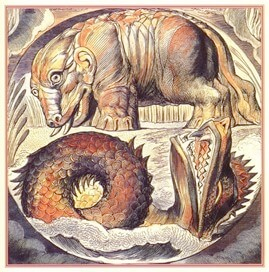
March 22, 2010
The Titanic Games
I was recently in Vancouver, Canada coincidentally at the same time as the Winter Olympic Games, and it occurred to me that the name Olympic Games is completely inaccurate and even dishonest. Let me explain.
One of Ernst Jünger's key symbols to characterize our post-enlightenment world is that of the titans from Greek mythology. His (and his brother Friedrich Georg Jünger's) idea is that we are living in a titanic world, in which the old gods have been defeated or have retreated out of human reach. Where there are no gods, the titans step in to fill the gap and exercise their powers.
Although an anarch takes no sides in the eternal struggle and alternation of titans and gods in world history, he should always understand the world he is living in, in order to best manage his relationship with it. This is part of his commandment to "Know the rules".
For an anarch, it is thus absurd to see the words "Olympic Games" used, especially when their organizers try to maintain an association with the ethics and spirit of the original Olympic Games. No, our modern games should rightly be called the Titanic Games, not only because we live in a titanic world, but because almost everything about these games in titanic in spirit.
Our Titanic Games are not about the spirit of peace, human excellence and companionship. Titans are literally "overstretchers" and so their games are above all about achieving extremes of performance at all costs: a new world record is the absolute prize, even more than a gold; performance-enhancing technology is as much a part of the games as human achievement (doping as much as equipment and training technologies); all performances are analyzed on the spot with quantitative criteria and statistics; and even their Opening Ceremonies are flashy spectacles of technological power rather than artistic measure.
In Vancouver, it was only in the ice dance competition that I could detect any remnant of the Olympic Games.
Subscribe to:
Posts (Atom)


