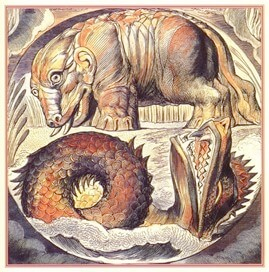
It is this crisis of the idea of progress that we can feel all over Ernst Jünger’s oeuvre, from his famous diaries of his experience in the Great War (In Stahlgewittern), to his “prophetic” work Der Arbeiter and his late novels. But one book of his in particular allows us to penetrate in the nihilistic zeitgeist of the inter-war period: his Auf den Marmorklippen, published at the zenith of Hitler’s power, in 1939. This little book – On the Marble Cliffs, in English –, forgotten in the same way which its author is neglected by the intelligentsia, tells us more about our own times – which are also times of crisis – than several of the “scientific” works that are widespread today, and which denounce a supposedly evident return of fascism. In this jüngerian tale, the despotic figure of the tyrant appears in its most violent essence, as the result of a cosmological disorder that hits society in all of its foundations. On the Marble Cliffs is a book that needs to be remembered, the meaning of which seems today almost as intelligible – and appropriate – as when it was first published.
We aspire to an objective, practical understanding of Ernst Jünger's life and works, and encourage other seekers of freedom and self-realisation to join us. Jünger's insights can function as a valuable roadmap to freedom and meaning for individuals in today's social and spiritual landscape. Crucial is his figure of the autonomous and inwardly-free anarch (in contrast to the impotent and self-destructive anarchist) as presented in his important novel EUMESWIL.
Showing posts with label technology. Show all posts
February 17, 2021
Between Order and Disorder: Ernst Jünger on the Marble Cliffs - by Francisco Carmo Garcia
(From VoegelinView, 16 Feb 2021)
October 28, 2019
November 13, 2017
"Technikutopie und Technikkritik bei den Brüdern Jünger": Tagungsprogramm 2018, Ernst und F.G. Jünger Gesellschaft
Kloster Heiligkreuztal, 23–25 März 2018
** Information und Anmeldung: Ernst und Friedrich Georg Jünger-Gesellschaft. Oder direkt per E-Mail an Hans-Peter Oberle
Freitag, 23 März 2018
- 20:00 - Eröffnung des Symposiums - Alexander Pschera und Thomas Bantle
- 20:15 - Die Philosophie der Technik in den 20er und 30er Jahren und Jüngers Arbeiter - Alexander Michailowski
- 21:30 - Umtrunk
Samstag, 24 März 2018
- 9:00 - Ernst Jüngers medientheoretische Überlegungen - Detlev Schöttker
- 10:00 - Jüngers Philosophie der Technik und Heidegger - Vincent Blok
- 11:00 - Kaffeepause
- 11:30 - F. G. Jüngers Perfektion der Technik im europäischen Denkkontext - Alexander Pschera
12:30 - Mittagessen
- 14:00 - Vom Verlust des Raumes in Zeiten der Beschleunigung: Ernst Jüngers Reiseprosa und die technische Moderne
- 15:00 - Schiffbruch mit Zuschauer. Zur Technikkritik im Myrdun und Der Waldgang - Niels Penke
- 16:00 - Kaffeepause
- 17:00 - Mitgliederversammlung der Ernst und Friedrich Georg Jünger-Gesellschaft e.V.
- 18:30 - Abendbrot
- 20:00 - Abendveranstaltung: Michael König (Burgtheater Wien) liest aus Ernst Jüngers Waldgang
Sonntag, 25 März 2018
- 9:30 - Ernst Jüngers Gläserne Bienen - Niels Werber
- 10:30 - Eumeswil und die Posthistoire - Helmuth Kiesel
- 12:00 - Besuch Jünger-Haus
- 13:00 - Mittagessen im Löwen, Wilflingen
- Ausklang - Mokka in Stauffenberg´schen Schloß, Wilflingen
October 12, 2016
Censorship and Technology: George Orwell's Animal Farm
Conferenza dell'Associazione Eumewil su:George Orwell e "La Fattoria degli Animali"
Sabato Ottobre 15, 17h
Hotel Croce di Malta
via della Scala 7
Firenze
Con questo incontro inizia la seconda parte del ciclo di conferenze "Cultura e censura nell'età della tecnica", a cura dell'Associazione Eumeswil di Firenze.
Angelo Arciero e Rocco Pezzimenti parleranno di "Orwell e La fattoria degli animali". Individuando nel totalitarismo il principale avversario della creazione artistica, ma ponendo sotto accusa anche i processi di massificazione in atto nelle democrazie capitaliste, lo stesso Orwell, riferendosi
May 17, 2016
CONFERENZA: Ernst Jünger tra censura e tecnica
Cari soci e simpatizzanti, siamo lieti di invitarVi ad un incontro dal titolo generale:
ERNST JÜNGER - TRA CENSURA E TECNICA
Sabato 21 maggio, ore 17
Hotel Croce di Malta
Via della Scala 7, Firenze
RelatorI: Valentina Menesatti e Pietro Piro.
Pierluigi Moressa al termine ci leggerà pagine tratte da Sulle scogliere di marmo di Ernst Jünger. Nel corso dell' incontro si esaminerà la possibilità di raggiungere zone sottratte al potere del Leviatano tecno-logico, dove l'uomo può incontrare se stesso e la propria divina potenza, lontano dal deserto del nichilismo. Che ne sarà dell' uomo? Se il destino della tecnica è quello di accrescere sempre di più la
March 15, 2016
Cultura e Censura nell'Età della Tecnica - Ciclo Conferenze Associazione Eumeswil 2016
Ecco gli incontri dell'anno 2016 dell'Associazione Eumeswil (English translation below):
Dal punto di vista della filosofia del diritto, la censura è quella attività repressiva esercitata dallo Stato mediante preventivo controllo per impedire il diffondersi di notizie o di opere letterarie che potrebbero risultare lesive del buon costume oppure dell' ordine pubblico. In un' epoca in cui si assiste alla scomparsa del buon costume e alla parodia sempre più marcata dell' ordine pubblico, si potrebbe credere che la censura non abbia più motivo di esistere. Invece nel corso del ventesimo secolo la sua forza si è enormemente accresciuta. Se prima si sopprimevano alcune righe di un testo, ora si sopprime un intero libro e talvolta il suo stesso autore.
Il ciclo di incontri promosso dall' Associazione Eumeswil si propone di indagare quali sono i motivi e le modalità di questo fenomeno apparentemente contradditorio, il cui risultato è l' impoverimento della cultura e l' affermazione del blablà o "pensiero unico" per mezzo della tecnica. Download programma
Con la speranza di averVi fatto cosa gradita, inviamo cordiali saluti,
Segreteria, Associazione Eumeswil
CULTURA E CENSURA NELL' ETA' DELLA TECNICA
Dal punto di vista della filosofia del diritto, la censura è quella attività repressiva esercitata dallo Stato mediante preventivo controllo per impedire il diffondersi di notizie o di opere letterarie che potrebbero risultare lesive del buon costume oppure dell' ordine pubblico. In un' epoca in cui si assiste alla scomparsa del buon costume e alla parodia sempre più marcata dell' ordine pubblico, si potrebbe credere che la censura non abbia più motivo di esistere. Invece nel corso del ventesimo secolo la sua forza si è enormemente accresciuta. Se prima si sopprimevano alcune righe di un testo, ora si sopprime un intero libro e talvolta il suo stesso autore.Il ciclo di incontri promosso dall' Associazione Eumeswil si propone di indagare quali sono i motivi e le modalità di questo fenomeno apparentemente contradditorio, il cui risultato è l' impoverimento della cultura e l' affermazione del blablà o "pensiero unico" per mezzo della tecnica. Download programma
Con la speranza di averVi fatto cosa gradita, inviamo cordiali saluti,
Segreteria, Associazione Eumeswil
Conference series 2016 of the Association Eumeswil in Florence:
CULTURE AND CENSURE IN THE AGE OF TECHNOLOGY
Sat 19 March
The case of Guido Morselli and the responsibility of publishers
Speakers: Valentina Fortichiari and Mario Baudino
November 26, 2014
iPhone4 or iPhonophore?
It was not Steve Jobs and Apple who invented the iPhone4 - they only gave birth to what Ernst Jünger had intellectually conceived in 1949 in the novel Heliopolis and continued into Eumeswil (1977). By a nice coincidence, Ernst Jünger's "universal communicator" has essentially the same name - the phonophore.
Below is a rough translation of the most relevant passage from Heliopolis - only a brief commentary is useful, so obvious are the parallels. (See also my previous blog on the Phonophore.)
(Originaltext auf Deutsch ist unten ...)
![]() |
| iPhone4 or iPhonophore? |
(Originaltext auf Deutsch ist unten ...)
November 18, 2012
FG Jünger's "The Failure of Technology: as ebook!
A fantastic recent find, which I trust readers will appreciate and help spread the word - an ebook of this classic and essential critique of modern "scientism" and technology, which has been out-of-print and virtually unfindable in English since the 1960's! It was translated in 1950 from the German original: "Die Perfektion der Technik" - which, btw, in German does not have the positive connotation of perfection in English, but simply implies the bringing to completion, to full development.
If you don't know the book, I cannot recommend it too highly! It as insightful as anything his brother Ernst wrote. It contains one of the original environmentalist visions, and its insights into the fundamental shortcomings and illusions of our science and technology have never been surpassed. FGJ gets down to the very heart of the matter, as more recent critiques have not been able to - the superior insight of the author also have been due to his position at a less developed stage of technology, which allowed a more detached, objective perspective.
A must read - spread the word and disseminate the book!
If you don't know the book, I cannot recommend it too highly! It as insightful as anything his brother Ernst wrote. It contains one of the original environmentalist visions, and its insights into the fundamental shortcomings and illusions of our science and technology have never been surpassed. FGJ gets down to the very heart of the matter, as more recent critiques have not been able to - the superior insight of the author also have been due to his position at a less developed stage of technology, which allowed a more detached, objective perspective.
A must read - spread the word and disseminate the book!
May 6, 2012
Francois Mitterand to Ernst Jünger on his 100th birthday - 1995
"Here is a man who is free.
Embroiled to the point of risking his life in the turmoil of the century, he held himself apart from his passions. Nothing can appropriate his name, nor his gaze, except perhaps that butterfly in Pakistan now called "Trachydura Jüngeri", which is his pride. Because this rebel chases glow-worms, this soldier writes novels. A philosopher, he possesses an appetite for living, which time has not wearied. Few life works are more diverse, few minds more restless. As inheritor of Goethe, of Hölderlin and Nietzsche, but also of Stendhal, Jünger's thought unites the riches of the Enlightenment with those of Romanticism, the rigour of the one with the generosity of the other.
His thought challenges fashions and attracts disputes. Lovers of systems hanker in vain to find them in it. Truth is to be sought in it like an equilibrium amid contrary forces. Between engagement and resistance, respect for the real and rejection of the predestined, Jünger charts the space of human freedom and its authentic struggles. Because its origins lie in its enthusiasm for life, it contemplates and faces contradictions: between mind and matter, nature and history, reason and dream.
May 1, 2012
Swedish documentary on Jünger - now in English!
The Swedish documentary on Ernst Jünger, previously only available in Swedish, has recently appeared on Youtube with English subtitles. Enjoy!
February 20, 2012
Concordia, Concorde, Titanic - Cassandra's warnings
UPDATE 20.02.2012: as the anonymous commentator below says, with the wreck of the Concordia, Cassandra may be reminding us in a whisper of what she shouted out 100 years ago with the Titanic, and, less obviously, with the Concorde disaster. But what else should we expect in our titanic world: for as much rhetoric about peace and harmony as there is today, titans are by their very nature not a concordant group - and when humanity becomes for a period titanic, then manifestations of egoism on a monumental scale are the result. These in turn can only ultimately result in disaccord and catastrophe. For those who have ears: Cassandra's warnings are only mild foreshadowings of what must come with the inevitable fall of the titans and what must happen to the human constructions and attitudes that follow the titanic model.
For those interested, this is all preeminently explained by F.G. Jünger in his Griechische Götter.
October 18, 2011
Ernst Jünger: Pionier der Entschleunigung
Wieder einmal muss ich mich bei Tobias Wimbauer bedanken für den Hinweis auf diesen Artikel aus "Jungen Freiheit":
JF, 2/11 / 14. Oktober 2011
Der konservative Pionier der Entschleunigung
Der Germanist Jan Robert Weber hat sich in seiner Dissertation der umfangreichen Reiseliteratur des „Jahrhundertmenschen“ Ernst Jünger gewidmet und entdeckt unerwartete Kleinodien.
Michael Böhm
Heinrich Böll ist nur ein Kolumbus in der deutschen Literatur des 20. Jahrhunderts. 1957 schilderte er in seinem vielgelesenen „Irischen Tagebuch“, wie er auf der Günen Insel einen Hafen besuchte und dort einen „alten Mann“ wahrnahm,, „der auf einer steinernen Bank“ vor einer Ruine saß: „Der Mann hätte vor dreihundert Jahren dort sitzen können“, schrieb er, „daß er Pfeife rauchte, ändert nichts an der Vorstellung; mühelos ließen sich Tabakspfeife, Feuerzeug und Woolworth-Mütze ins siebzehnte Jahrhundert transponieren.“
Doch der stillstehende „vormoderne Beharrungsraum“, dem Böll angesichts der bewegten, schnellen Zivilisation der Städte in poetischer Sprache huldigte – er war in Deutschland schon literarisch betreten. Wie Kolumbus, dem „Entdecker der Neuen Welt“, ging auch Böll dem „Entdecker literarischer Langsamkeit“ von 1957, ein Erik der Wikinger voran: Ernst Jünger. Zu diesem Zeitpunkt lag hinter Jünger schon über ein Vierteljahrhundert literarischer „Entschleunigung“; hatte er in seinen Reisetagebüchern aus Sizilien, Norwegen oder Brasilien bereits ausschließlich Refugien der Muße, der Kontemplation und des verminderten Tempos beschrieben – und damit räumliche Utopien entwickelt zu den Zumutungen und Überforderungen der sich rasant verändernden Welt. „Der ferne Anblick der grauen Ringmauer von Korcula mit ihren runden, mächtigen Wehrtürmen“, heißt es etwa in Jüngers „Dalmatinischem Aufenthalt“ von 1934, „steigert das Gefühl der Zeitlosigkeit; man könnte meinen, daß man sich an einem vergessenen Gestade des Mittelalters oder selbst der homerischen Welt befand.“
Subscribe to:
Posts (Atom)


