Monday, November 9, 2009

Mauerfall - Fall of the Berlin Wall

Before he pushed the first domino in the symbolic "Fall of the Wall" in Berlin tonight, Lech Walesa said no politicians could have foreseen before 1989 that the Wall would fall - which goes to show how much more clearly an anarch understands history and therefore reality:

"At various times, I have stood between the barricades - for example, during March 1848, after the fateful shot was fired in front of the castle, then again at the end of the two great wars between the red flag and the swastika. I was there when the great barricade hardened into a wall and once again when it was razed".
"Verschiedene Malen stand ich dort zwischen den Barrikaden, so in jenem März, nachdem vorm Schloß der verhängnisvolle Schuß gefallen war, dann wieder am Schluß der beiden großen Kriege zwischen der Roten Fahne und dem Hakenkreuz. Ich war dort, als die Barrikade sich zur Mauer verhärtete, und wiederum, als sie geschleift wurde".

Ernst Jünger, "Eumeswil", published in 1977.

(I will not speculate here on what an anarch would have to say regarding the new personal freedom won in that moment - if anything, then probably not too much.)


Share/Save/Bookmark

Wednesday, October 21, 2009

Cain, Tubalcain and the Anarch


China's 60th Anniversary national day

What would an anarch have to say to the above spectacle? Here's what the Ur-Anarch Ernst Jünger wrote in "Glass Bees":

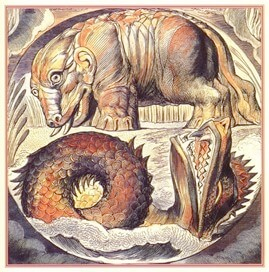
When new models were displayed to the masses at the great parades in the Red Square or elsewhere, the crowds stood in reverent silence and then broke into jubilant shouts of triumph. What was the meaning of this thunderous roar, when on the ground turtles of steel and serpents of iron rolled past, when in the sky triangles, arrows, and rockets shaped like fish, arranged themselves with lightening rapidity into ever-changing formations? Though the display was continual, in this silence and these shouts something evil, old as time, manifested itself in man, who is an outsmarter and setter of traps. Invisible, Cain and Tubulcain marched past in the parade of phantoms.


Share/Save/Bookmark

Saturday, October 10, 2009

The anarch - a wolf, a master spy?

It occurs to me that one could explain and differentiate the Anarch and the Waldgänger with at least a couple of analogies ....

One could bring the old English expression "a wolf in sheep's clothing" to bear on the Anarch, who appears to be like the masses around him but underneath is not at all. He can be social but he is not socialized. Unlike the socialized beings around him, he remains fundamentally a free loner, even with his sheep's clothing on. He has strong, sharp teeth, which he hides, so they are not pulled "for the common good of the herd" - he may need them in an emergency.

But the analogy only goes so far and the differences are equally revealing. The anarch's relationship to the sheep around him is not predatory - this wolf's enemy is the shepherd and his dogs, not the sheep. When he is smelled out, he is forced to throw off his disguise, run for the cover of the woods, use his teeth if necessary in defense - in short, become a Waldgänger.

Another analogy - this time not mine but Jünger's - is the master spy, who disguises his true nature and loyalties and lives smoothly integrated into a world that is essentially foreign to him. Like the Anarch, his true mission remains his secret and it is entirely different from those around him. Like the Anarch, he puts on a false mask, a foreign uniform and he must resist identifying with those around him and their causes - when the mission is a very long one, this difficulty is not to be taken for granted - spies are turned, as free souls are lost to the world. Lastly, the ordinary people around the spy are not his enemies but rather their master and his watchdogs. An Anarch with philanthropic tendencies, may even, like certain spies, come to empathize with the ordinary innocents around him, secretly feel that in his small way he may be helping to free them from a bad master.

As with the wolf analogy, the differences are also important to note here. The master spy knows from the start who he is and what his mission is; the Anarch has first to lose himself to society and then laboriously to rediscover his true identity, his true heimat, his mission in life. The Anarch has no aspirations to contribute, however indirectly, to the defeat of the society he is embedded in - he is not an anarchist. Though he may go to great lengths to serve an external cause, if his own integrity or the challenge appeals to him, he will not ultimately martyr himself to it. And finally, the Anarch works for no other master, he is his own.


Share/Save/Bookmark